Diagnostic of sporadic and hereditary myeloproliferative diseases
Aims
The aims of MPN&MPNr-EuroNet’s eleventh meeting to be held in Poznan, Poland, on April 27-29, 2016 are:
- to share information on the newest developments in MPNs and related congenital diseases, hereditary erythrocytosis and hereditary thrombocytosis;
- to exchange and diffuse the latest information and guidelines on the molecular assays developed for diagnosis or research in laboratories working on MPNs and related diseases across Europe;
- to provide guidelines for the molecular diagnosis of MPN, hereditary erythrocytosis and hereditary thrombocytosis;
- to discuss and plan for the various tasks and objectives of the three MPN&MPNr-EuroNet working groups (WG);
- to help and encourage young scientists interested in MPNs.
To do so, abstracts will be selected for short talks in the different sessions. Posters will be presented during the whole length of the meeting.
Plenary sessions will cover the newest knowledge in MPNs. Each WG will convene under the direction of the WG chairs. New participants are encouraged to become actively involved in specific WG tasks.
Objectives
Participants to the eleventh MPN&MPNr-EuroNet meeting will have the opportunity to hear from international experts about the newest developments in the molecular diagnosis of MPNs and related congenital/hereditary diseases. They will have the opportunity to present their own work and original diagnostic assays, and exchange with colleagues and experts on the newest genes and techniques of interest in the field of MPNs, congenital erythrocytosis and hereditary thrombocytosis. By joining one or more of MPN&MPNr-EuroNet working groups, they will be able to contribute actively, productively and durably in innovation, optimization and standardization of the biological diagnosis of MPNs and related congenital diseases in Europe.
Keywords
molecular diagnosis, myeloproliferative neoplasms, congenital erythrocytosis, hereditary thrombocytosis, standardization, European network
More info
Click on the following link to get more info about MPN&MPNr-EuroNet.
Abstract Submission
Participants are encouraged to submit an abstract in relation to the diagnosis of MPNs, new mutations in MPNs, the histopathology of MPNs, the pathogenesis of MPNs, inflammation in MPNs, congenital erythrocytosis, hereditary thrombocytosis, and the JAK/STAT and other signalling pathways of interest in MPNs. Early stage researchers and junior biologists and clinicians are especially encouraged to submit abstracts.
Abstracts should be composed as follows:
- Title
- Names of co-authors
- Institutions and addresses
- E-mail address of corresponding author
- Text (body of text less than 2000 characters, including spaces).
All abstracts will be put together in an Abstract Book that will be distributed to participants during the meeting.
The deadline for submission of abstracts is March 14th, 2016.
In order to submit an abstract, participants should first be registered, then, being logged in, choose Abstract in the menu bar on Registration page.
Scholarships
MPN&MPN-EuroNet offers scholarships to early state researchers (ESRs) and biologists : PhD students, researchers, biologists or clinicians who received their MD or PhD degree less than 8 years ago. To apply for a scholarship, ESRs must submit an abstract following the on-line procedure, and send a letter of motivation and their curriculum vitae to Dr. Sylvie Hermouet.
Please upload here the CV template .
The deadline for application to a scholarship is March 14th, 2016.
Applicants will be informed of the decision regarding attribution of scholarship via E-mail by March 23rd, 2016.
Reimbursements of scholarship recipients
To allow sufficient time for treating the files of all individuals applying for reimbursement, registration should be done before April 4th, 2016.
Diagnostic of Sporadic and Hereditary Myeloproliferative Diseases
WEDNESDAY April 27th, 2016 |
|||
| 16:30 – 17:00 | Welcome and Registration | ||
| 17:00 – 18:45 | Special Session I | Chair: Prof. Dr hab. Krzysztof Lewandowski (PL) | |
|
|||
| 19:00 – 20:00 | Dinner at NH Hotel | ||
THURSDAY April 28th, 2016 |
|||
| 08:30 – 10:30 | WG1 session: Mutation Detection and Validation | Chair: Beatriz Bellosillo Paricio (ES) | |
| 08:30 – 09:15 | Whole exome sequencing studies reveal disease driving mutations in myeloproliferative neoplasms | Harini Nivarthi (AT) | |
| 09:15 – 09:45 | Experience of NGS-targeted sequencing in myeloproliferative neoplasms | Beatriz Bellosillo Paricio (ES) | |
| 09:45 – 10:15 | Simultaneous detection of MPL mutations by fragment analysis | Julia Asp (SE) | |
| 10:15 – 10:30 | Random coincidence: myeloproliferative neoplasms with two driver mutations ? | Hajnalka Andrikovics (HU) | |
| 10:30 – 11:00 | Coffee/Tea Break | ||
| 11:00 – 13:00 | WG2 session: Mutation Quantification and MRD | Chair: Niels Pallisgaard (DK) | |
| 11:00 – 11:30 | Reference Materials for JAK2 V617F and other molecular diagnostic markers. | Jennifer Boyle (UK) | |
| 11:30 – 12:00 | Dynamics of mutations in patients with ET treated with Imetelstat | Elisabeth Oppliger Leibundgut (CH) | |
| 12:00 – 12:30 | Cellular distribution of mutated CALR in peripheral blood | Lasse Kjaer (DK) | |
| 12:30 – 12:45 | Differential dynamics of CALR mutant allele burden in MPNs during interferon treatment | Sabrina Cordua (DK) | |
| 12:45 – 13:00 | Single-tube multiplex PCR assay for the detection of the most common mutations in MPNs | Aleksandar Eftimov (MK) | |
| 13:00 – 14:15 | Lunch – Free Time for Informal Discussions and Networking – Poster Session | ||
| 14:15 – 16:15 | WG3 session I: Hereditary Erythrocytosis | Chair: Mary Frances McMullin (UK) | |
| 14:15 – 14:45 | Use of Next Generation Sequencing for the diagnosis of hereditary erythrocytosis: First results of a French series | Betty Gardie (FR) | |
| 14:45 – 15:15 | Renal erythropoietin regulation | Roland Wenger (CH) | |
| 15:15 – 15:45 | Distal hypoxia response elements mediate HIF-regulated gene expression | David Hoogewijs (DE) | |
| 15:45 – 16:00 | A comprehensive Next Generation Sequencing Gene Panel focused on Idiopathic erythrocytosis | Mark Catherwood (UK) | |
| 16:00 – 16:15 | Absence of CALR mutations in idiopathic erythrocytosis patients with low serum erythropoietin levels | A. Graham (UK) | |
| 16:15 – 16:45 | Coffee/tea Break | ||
| 16:45 – 18:00 | Business sessions in small group WG3 – Erythrocytosis, Thrombocytosis Free Time for Informal Discussions and Networking |
||
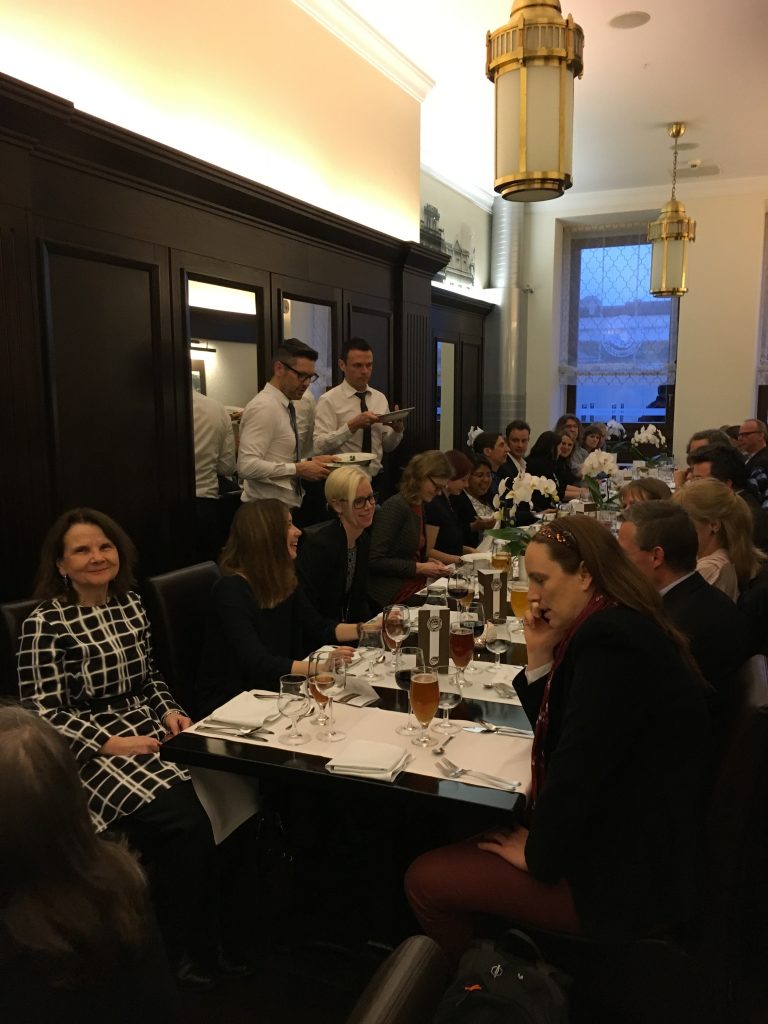
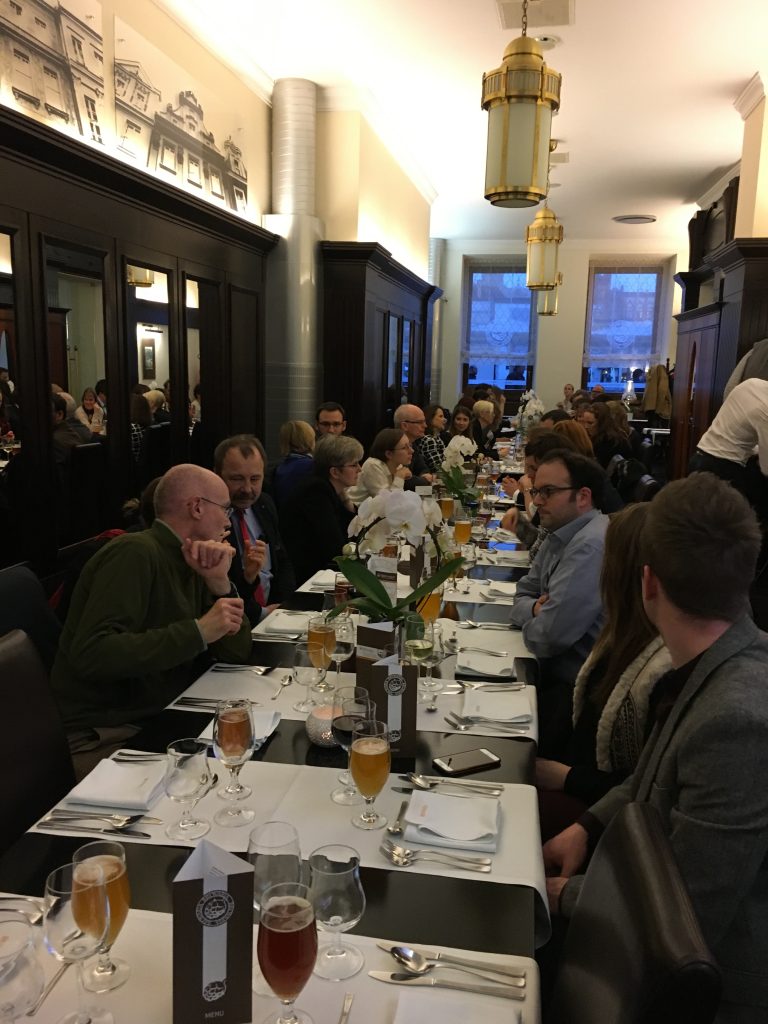
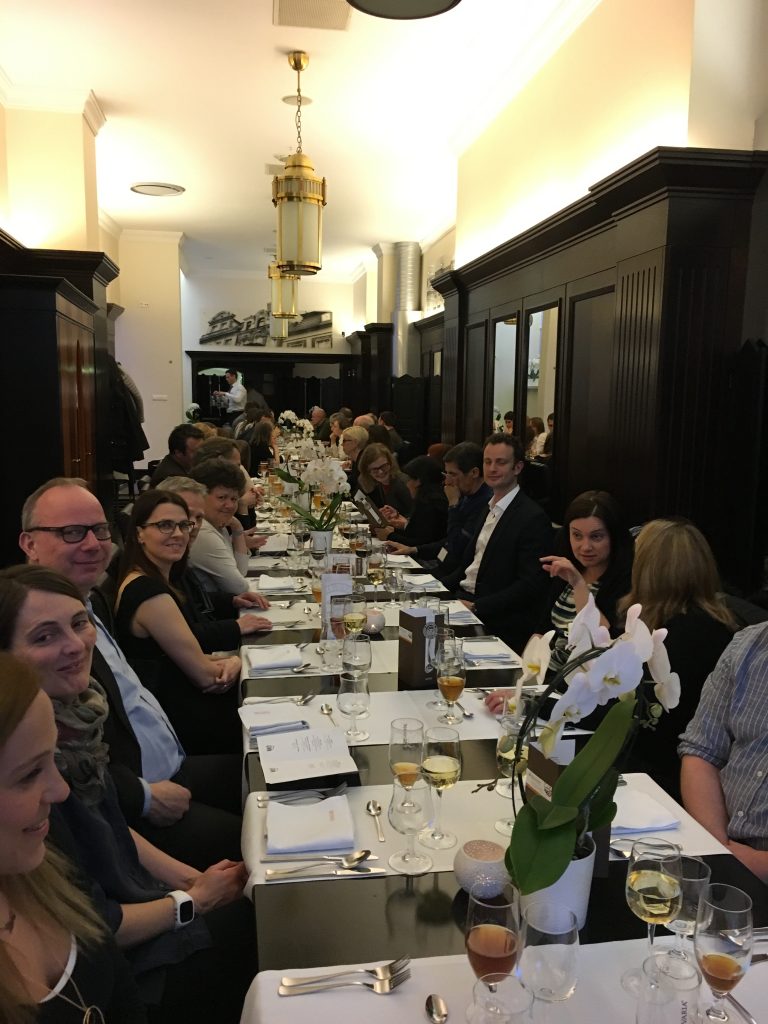
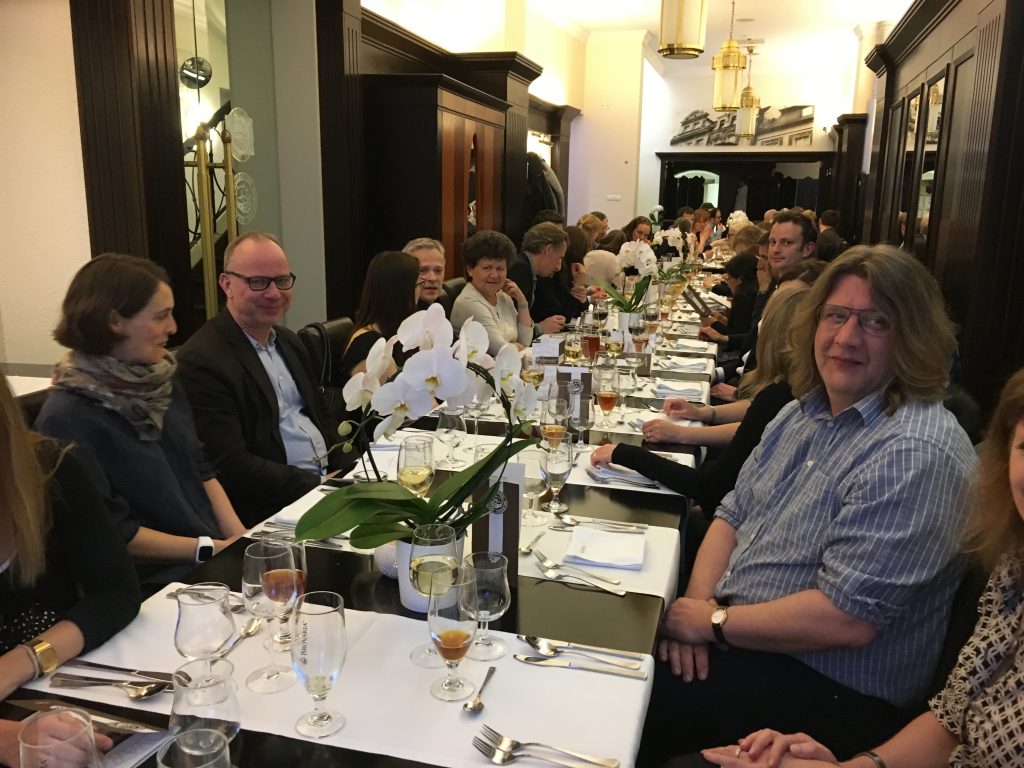
| 20:00 – 22:00 | Gala Dinner at Brovaria Restaurant, Stary Rynek 73 street, Poznan | ||
FRIDAY April 29th, 2016 |
|||
| 08:30 – 10:00 | WG3 Session II: Hereditary Erythrocytosis/Hereditary Thrombocytosis | Chair : Mary Frances McMullin (UK) | |
| 08:30 – 09:00 | Mpl Gain-of-Function Mutations Can be Classified By Differential Subcellular Processing, Molecular Mechanisms, Mode of Inheritance and Clinical Impact | Clemens Stockklausner (DE) | |
| 09:00 – 09:20 | JAK2 and MPL mutations in the context of familial thrombocytosis | Sylvie Hermouet (FR) | |
| 09:20 – 09:30 | A case of systemic mastocytosis with a c-Kit D816V mutation present at birth | Clemens Stockklausner (DE) | |
| 09:30 – 10:00 | Poster walk | Marzena Wojtaszewska (PL) | |
| 10:00 – 10:30 | Coffee/Tea Break | ||
| 10:30 – 11:30 | General Business Session | Chair: Sylvie Hermouet (FR) | |
| 10:30 – 10:40 | MPN&MPNr-EuroNet 12th meeting | ||
| 10:40 – 10:50 | MPN&MPNr-EuroNet 6th Training School (Nîmes, FR) | Serge Carillo (FR) | |
| 10:50 – 11:30 | Collaboratives studies Publications, Abstracts, Budget, Website |
Sylvie Hermouet (FR) | |
| 11:30 – 12:30 | Business sessions in small groups WG1 – Mutation detection, WG2 – Mutation quantification |
||
| 2 rooms available | |||
| 12:30 – 14:00 | Lunch – Free Time for Informal Discussions and Networking – Poster Session | ||
| 14:00 – 15:30 | Special Session II | Chair: François Girodon (FR) | |
| 14:00 – 14:45 | Functional and molecular characterization of germline genetic abnormalities in familial MPN and MPN-like | Isabelle Plo (FR) | |
| 14:45 – 15:00 | HSP27 in myeloproliferative neoplasms | Margaux Sévin (FR) | |
| 15:00 – 15:30 | Characterising the inflammasome in Polycythaemia Vera | Helen Wheadon (UK) | |
| 15:30 | Meeting Adjourn | ||
52 registered participants on 07-12-2019
| # | Name | Affiliation | Country |
|---|---|---|---|
| 1 | Sylvie HERMOUET | Inserm UMR892 | France |
| 2 | Ana Livun | University hospital Dubrava | Croatia |
| 3 | Marzena Wojtaszewska | Poznań Medical University | Poland |
| 4 | Véronique Laloux | QIAGEN | France |
| 5 | Francois Girodon | laboratory of Heamatology | France |
| 6 | Betty GARDIE | Inserm UMR892 | France |
| 7 | Roland Wenger | University of Zurich | Switzerland |
| 8 | Jennifer Boyle | NIBSC | UK |
| 9 | Isabelle PLO | INSERM U1170 | France |
| 10 | Hans Hasselbalch | Roskilde University Hospital | Denmark |
| 11 | David Hoogewijs | University of Duisburg-Essen | Germany |
| 12 | Sabrina Cordua | Zealand University Hospital, Roskilde, Denmark | Denmark |
| 13 | Stephen Langabeer | St. James Hospital | Ireland |
| 14 | Vibe Skov | Roskilde Hospital | Denmark |
| 15 | Mary Frances McMullin | Queens University Belfast | Northern Ireland |
| 16 | Mark Catherwood | Belfast Health and Social Care Trust | UK |
| 17 | Clemens Stockklausner | Klinikum Garmisch-Partenkirchen | Germany |
| 18 | Annette Schmitt–Graeff | Universityhospital Freiburg | Germany |
| 19 | Niels Pallisgaard | Zealand University Hospital | Denmark |
| 20 | Holger Cario | University Medical Center Ulm | Germany |
| 21 | Harini Nivarthi | CeMM esearch Center for Molecular Medicine of the | Austria |
| 22 | Serge CARILLO | Universitary Hospital CAREMEAU | France |
| 23 | Tomasz Stokłosa | Medical University of Warsaw | Poland |
| 24 | Michał Gniot | Poznań Medical University | Poland |
| 25 | margaux sevin | inserm u866 | france |
| 26 | Helen Wheadon | University of Glasgow | United Kingdom |
| 27 | Hajnalka Andrikovics | Hungarian National Blood Transfusion Service | Hungary |
| 28 | Lasse Kjaer | University Hospital of Region Zealand | Denmark |
| 29 | Irina Panovska-Stavridis | University Clinic of hematology-Skopje | Rep. of Macedonia |
| 30 | Julia Asp | Sahlgrenska University Hospital | Sweden |
| 31 | Aleksandar Eftimov | Faculty of Pharmacy | Rep. of Macedonia |
| 32 | Svetlana Treglazova | National Reseach Center for Hematology | Russian Fed. |
| 33 | Alicja Bartoszewska-Kubiak | Faculty of Medicine, Nicolaus Copernicus Universit | Polska |
| 34 | Manana Sokolova | National Recearch Center for Hematology | Russian Fed. |
| 35 | Karolina Matiakowska | Nicolaus Copernicus University, Faculty of Medicin | Poland |
| 36 | Lars Palmqvist | University of Gothenburg | Sweden |
| 37 | Jarosław Kopiczak | Szpital Specjalistyczny Podkarpacki Ośœrodek Onk | Poland |
| 38 | Malgorzata Kurkowiak | Medical University of Warsaw | Poland |
| 39 | Krzysztof Lewandowski | Poznań Medical University | Poland |
| 40 | Elisabeth Oppliger Leibundgut | University Hospital Bern | Switzerland |
| 41 | Margarida Coucelo | Centro Hospitalar e Universitário de Coimbra | Portugal |
| 42 | Magdalena Zawada | Klinika Hematologii | Poland |
| 43 | Dorota Link-Lenczowska | Klinika Hematologii | Poland |
| 44 | Marta Sobas | Szpital SPK1 | Poland |
| 45 | Bożena Jaźwiec | Szpital SPK1 | Poland |
| 46 | Maj Westman | Copenhagen University Hospital | Denmark |
| 47 | Marta Vorland | Haukeland University Hospital | Norway |
| 48 | Beatriz Bellosillo | Hospital del Mar | Spain |
| 49 | Amy Graham | Belfast Trust | UK |
| 50 | Kornelia Bukojemska-Kornelak | Szpital Uniwersytecki w Krakowie | Polska |
| 51 | Zofia Litwińska | Novartis Poland | Poland |
| 52 | Zuzanna Kanduła | Poznań Medical University | Poland |
Conference location
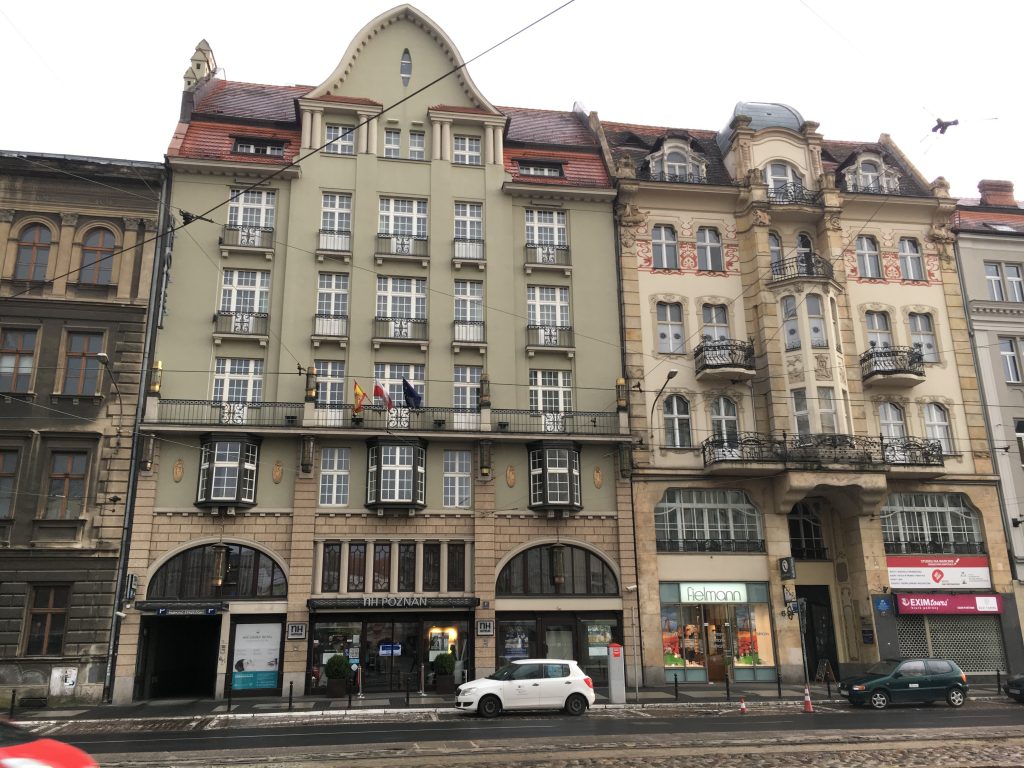
| NH Hotel Poznań
Świety Marcin 67 Phone: +48 61 6248800 |
 |
 |
The NH Poznan hotel is a 100-year-old building in the city’s shopping district, making it an excellent base for exploring Poznan’s cultural highlights. The location’s also great for those here on business – the Poznan International Fair, the train station and the famous Old Market are all within easy walking distance. Our 6 meeting rooms hold between 16 and 80 people and all are geared up for hosting business meetings, presentations and parties.
For booking your room please see below the Accommodation section.
Contact with the organizers: Before contacting the organizers, please read carefully all information provided on the website. The meeting organization local contact persons are Prof. Krzysztof Lewandowski, e-mail krzysztof.lewandowski@skpp.edu.pl, and Mrs. Marzena Wojtaszewska, e-mail wojtaszewska@gmail.com.
Questions may also be asked through the Contact webpage. Thank you for your understanding and co-operation.
How to register, submit a contribution, pay registration fees, get invoice? For registration, submission of contribution … select Registration on the menu bar.
How to get there?
Visa regime in Poland
Poland has been a part of the European Union and a part of Shengen Area. VISA are required for the European guests from Turkey, Russian Federation, Belarus and Ukraine. For details, please contact local Embassies.
Currency
Currency in Poland is Polish Zloty (PLN).
The current exchange rate (as of September 2015) is 1 € = 4,25 PLN.
As the official currency, the Polish Zloty is the only possible currency to use when paying in most facilities. Many exchange offices are available and easily accessible.
Travelling to Poznań by air …
Please visit the Poznań Lawica airport for the details.
Transportation from the Poznań Lawica airport to the NH Hotel
-
- Taxi
It takes approximately 25 – 30 minutes (40 minutes in heavy traffic) to reach the centre. The price for taxi is approx. 30-45 PLN (10 €) from the Lawica Airport to the NH Hotel Poznań. Please check the price with the taxi driver at entering the cab. Departure points are situated in front of arriving halls. - Public transport
You can reach Poznań city centre (walking distance from the hotel) from the bus station situated just outside the airport. Lines L and 59 depart to the city every 15-30 minutes. Cost of a bus ticket is approx. 1-2 €.
- Taxi
Travelling to Poznań by car …
All needed information can be found here .
Travelling to Poznań by train …
You can check the railway connections here or contact your local operator.
Travelling to Poznań by bus …
Due to the major roadworks in the centre and city traffic reorganization, the detailed information about public transport and commuting will be available via organizer in 2016.
Public transport in Poznań
There is dense network of trams and buses. Tickets are universal and are priced on the basis of travel time. They can be bought at any newspaper stand and cost approx. 1 € for a 30 minutes ride. Due to the major roadworks in the centre and city traffic reorganization, the detailed information about public transport and commuting will be available via organizer in 2016.
Accommodation
Each participant has to make his/her own room reservation.
It is recommended to stay at:
- NH Hotel Poznań where the main event will take place.
The historic hotel is situated near the old city centre. It has 93 stylish guestrooms, which are decorated in natural shades of brown and grey. Rooms come with queen or twin beds, as well as Wi-Fi and satellite TV. The hotel has a stylish restaurant serving a menu of modern European food. You’re also welcome to have a drink in our cozy bar. Meanwhile, if you want to exercise, you can visit our basement gym. Down here there’s also a wellness area with a Turkish bath and a Finnish sauna. Massages are also available.
A discount hotel prices for the meeting attendants will be available – password will be “Euronet”
Information about rates and discounts will be announced in the coming weeks.
Other recommended hotels in walking distance from the conference venue:
Poznań - Touristic information
Poznań is perceived as the historical capital of Greater Poland — a region in central-western Poland. In terms of population, it’s the fifth largest Polish city.It carries many ages of tradition, reaching all the way back to the 10th century, and the beginnings of the Polish nation. For this reason in 2008 Poznań was declared a historical monument. Poznań’s cathedral contains tombs of the first rulers: Mieszko I, and Boleslaus the Brave. Cities old town is filled with monuments of various eras. The city hall at the Old Market Square is an ideal example of Renaissance architecture. It features the town’s famous billy-goats. Fara church and the former Jesuit college represent Baroque. Poznań also features Poland’s oldest cathedral. Other parts of the city feature Secession monuments, and the monumental style of the Caesar’s District. The promenade leading to the Old City features Old Brewery — an exceptional Centre of Trade, Art, and Business, which received the ISCS award of “the best shopping centre worldwide” in 2008. Poznań Citadel is the set of fortifications (18 forts) developed in between 19th-20th century and is Europe’s third largest system of this type.